Electricity leaves us at worst times. And choosing a solution may feel completely overwhelming. But don’t worry, I’ve got you covered with three levels of home power backup options for your specific power needs.
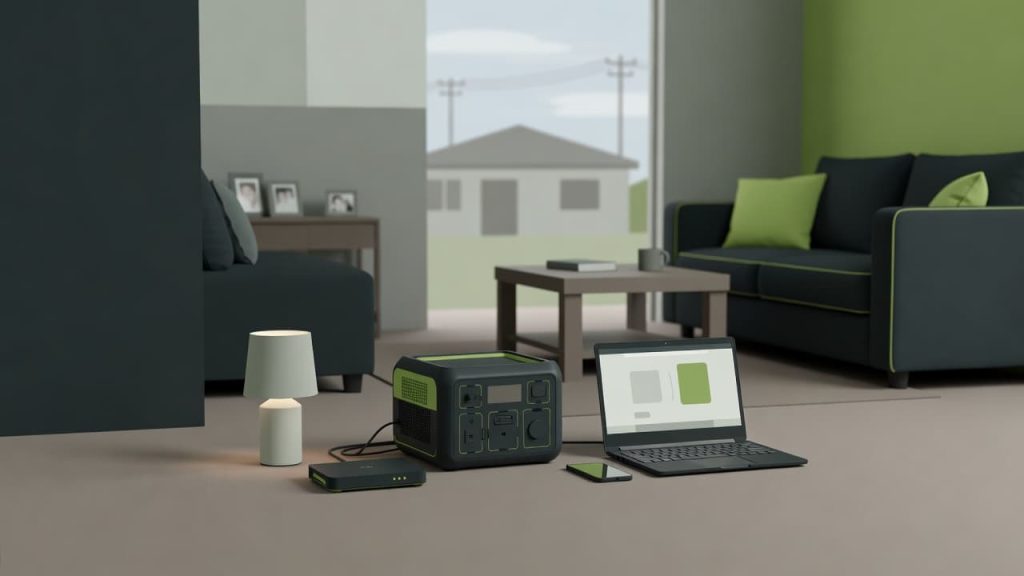
You’re just about to make dinner. You’re in the middle of an important online meeting. Your kid is writing exams tomorrow.
Without any fanfare, the lights go off.
You are disconnected.
You are now stuck without electricity.
It’s something South Africans are used to. While we celebrate a year without loadshedding, the power outages have not stopped. Here is Gqeberha it’s our rusted infrastructure, vandalism or any number of reasons. The fact of the matter remains: we all need a backup to function. Recently my suburb was out for five days and I was basically living at my mother’s house. But for smaller outages I have an invertor and it will keep my Wifi up and running for about four hours.
As much as we are used to problems, as well as the rising electricity costs, we are resilient and are used to making a plan.
The good news is simple. There isn’t one right answer. The best option depends on your budget, what you need to keep on, and how long the outage usually lasts. Finding reliable backup power is the priority for most households, and the right system will keep your life running smoothly regardless of the conditions.
Key Takeaways
- Prioritize real needs: Start by identifying essential items like Wi-Fi, lights, and laptops rather than attempting to power your entire home immediately.
- Understand capacity vs. output: Battery capacity determines how long your devices run, while output power dictates how many high-draw appliances you can use simultaneously.
- Choose the right technology: Modern lithium-based portable power stations offer a quiet, safe, and maintenance-free alternative to traditional fuel-powered generators for indoor use.
- Plan for scalability: Opt for systems that allow you to expand your battery bank or energy capacity later, ensuring your investment grows alongside your household needs.
How to choose the right home power back up for your family
Before buying anything, think about your real routine. Not the dream setup, the normal Tuesday one. A family that only needs Wi-Fi, lights, and phones for two hours needs a different kind of backup power than a home that wants the fridge, TV, and laptops running all evening.
Battery capacity is about runtime. Output power is about what the unit can run at the same time. Both matter. A small system can handle a router and a lamp for ages, then trip quickly if you plug in a kettle. This has actually happened to me: the one time I plugged in a hair dryer!
Noise, indoor safety, and portability matter too. Portable power stations and battery-based inverters are quiet and safe for indoor use. Modern systems typically use a lithium battery rather than older technology like lead acid batteries or gel batteries, which require more maintenance and are less efficient. Generators are louder, need fuel, and must stay outside because of carbon monoxide fumes.
Work out what you actually need to keep on
Most homes start with the same short list, including a router, phones, laptops, a lamp, TV, maybe a fan, and a few essential home appliances. That is the basics.
Fridges, kettles, microwaves, heaters, and hairdryers are another story. They draw much more power. Once those go on the list, the required system size jumps significantly.
For me: work is my essential. I need my laptop and Wifi to work. Food can wait or I can use gas. (This is roughly working on a four hour max outage).
Balance budget, runtime, and convenience
Cheaper units cover short outages and charging. Mid-range options buy longer runtime and more comfort. Premium systems cost more, but they cut far more disruption.
Here is the rough graph:
Here is the rough picture:
| Budget level | Usually enough for | Best for |
|---|---|---|
| Light | Router, phones, lamp, laptop | Short outages |
| Mid-range | Lights, TV, Wi-Fi, several devices | Evenings and work-from-home |
| Premium | Longer runtime, heavier loads | Frequent or extended outages |
The step up is less about status and more about how much disruption you want to avoid. Buy for daily essentials first, not every appliance in the house.
If power cuts are affecting sleep, schoolwork, or bedtime, these tips on managing children during power load shedding are helpful too.
Option 1: BASICS: Best home power back up options for light essentials
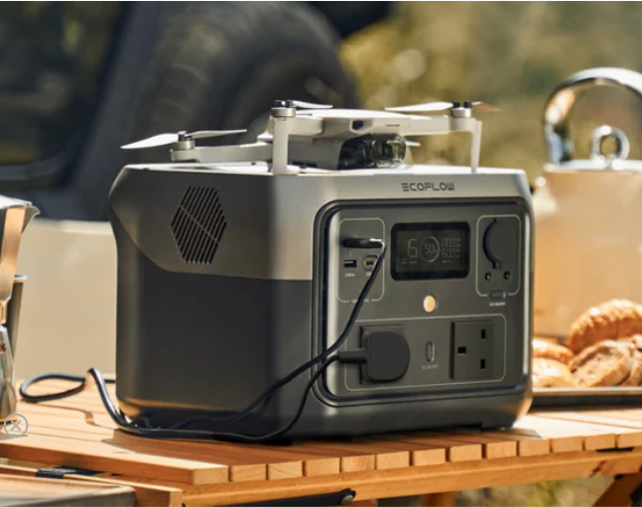
If you mainly want to stay connected, an entry-level portable power station is a smart place to start. The EcoFlow RIVER 2 Max fits this budget tier perfectly, as it features advanced lithium iron phosphate battery chemistry that ensures a long lifespan for your investment. It is made for short outages and small daily needs, rather than trying to power your entire home as if you were still on the grid.
What a compact portable power station can run
Think routers, phones, tablets, laptops, a lamp, and maybe a small fan. Using this portable power station is ideal for staying online during a sudden power failure, ensuring your remote work or homework continues without a hitch. While a mini UPS is a suitable alternative if your only goal is to keep your Wi-Fi router running, this unit provides the added versatility of a pure sinewave inverter, which offers much safer charging for your sensitive electronics. Don’t expect a compact unit to run a kettle or heater well.
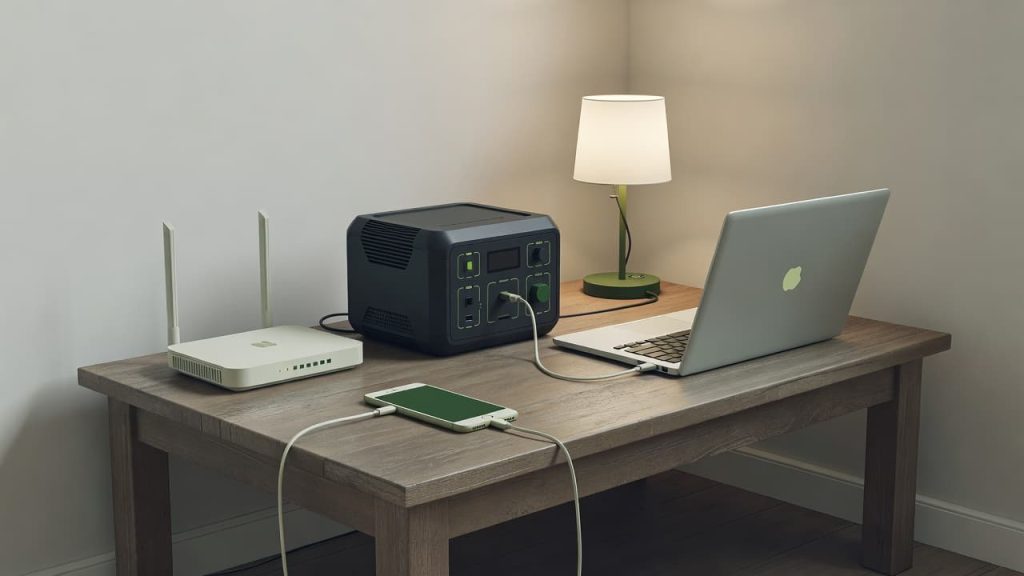
Plenty of South Africans make the same point in this discussion on remote working and load shedding, start with Wi-Fi and laptop power, then add more only if you need it.
A basic inverter can also help at this level, though they tend to be less flexible.
Option 2: MORE COMFORT: Everyday home backup for longer comfort and fewer interruptions
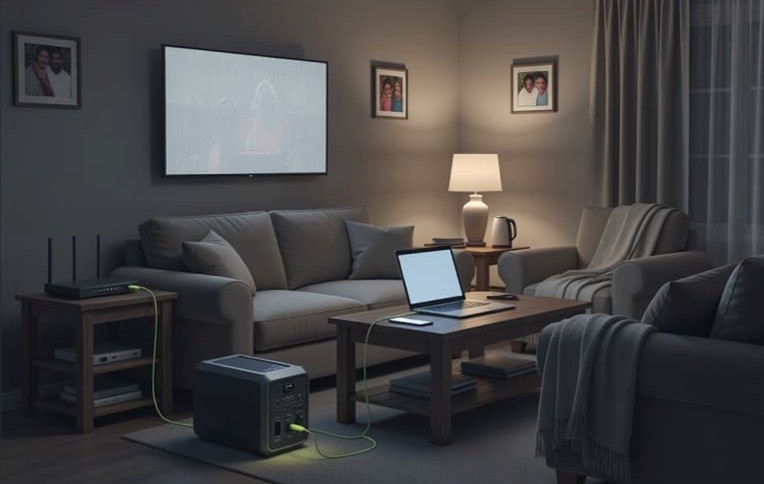
Some homes want more than survival mode. They want the evening to feel mostly normal. That is where a mid-range backup power option like the EcoFlow DELTA 3 Max makes sense. While this unit acts as a high-capacity uninterruptible power supply for your sensitive electronics, its advanced lithium battery technology makes it far more versatile for everyday use.
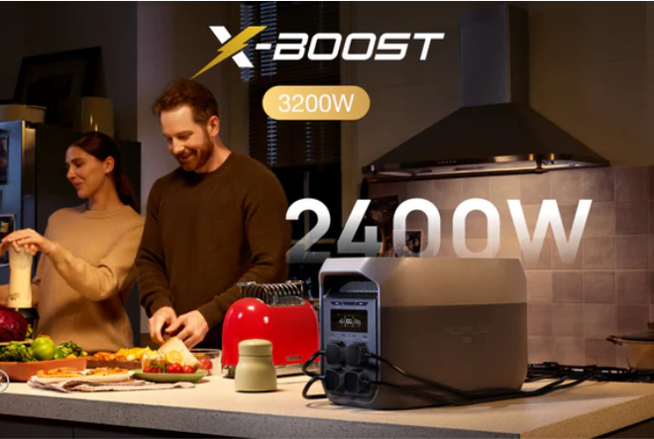
This level of performance can usually keep the router, lights, TV, and laptops going at the same time. That matters when children need to finish homework or parents are working from home, especially during unexpected load shedding. It also means less charger-swapping and significantly less stress during an outage.
A better fit for Wi-Fi, entertainment, and family routines
A mid-range unit provides more runtime and more breathing room. By acting as a robust battery bank for the family, the system ensures that if one person is on a laptop and another wants the TV on, the power flow does not feel stretched.
That is often the sweet spot for family life, as it provides enough energy to smooth the rough edges of a power cut without the complexity of a full installed system.
What to look for in a mid-range system
Look for higher capacity, faster charging, and enough ports to power multiple home appliances simultaneously. Ease of use also counts. If a system feels complicated, it tends to become another chore that nobody wants to deal with. A large inverter with dedicated battery storage can do a similar job, but a portable power station is often the simpler starting point.
Option 3: MORE POWER FOR LONGER: For longer outages, think bigger and plan ahead
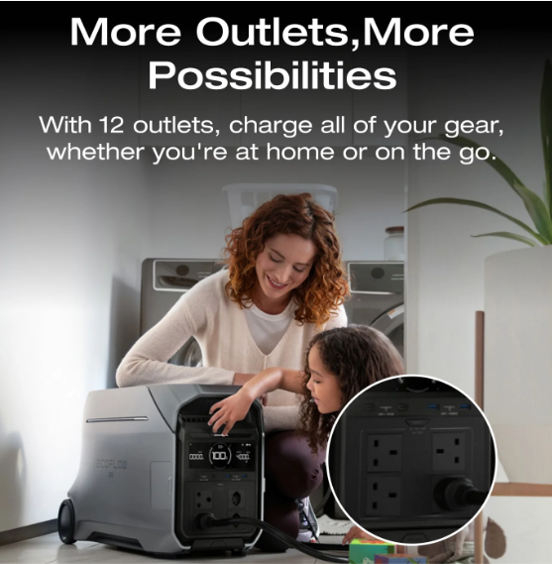
When outages are frequent or drag on for hours, small fixes stop feeling cheap and start feeling annoying. That is when a high-capacity option like the EcoFlow DELTA Pro 3, which offers expandable capacity for those needing a reliable whole home backup solution, starts to make sense.
When a high-capacity backup system makes sense
This tier suits larger families, full-time remote workers, homes with medical equipment, or households that want to keep more than the basics running. Fridge power, workstations, lights, and entertainment over a long outage can all push you here. For a permanent setup, integrating this system with a smart home panel allows for backup power to be delivered directly to essential circuits throughout your property.
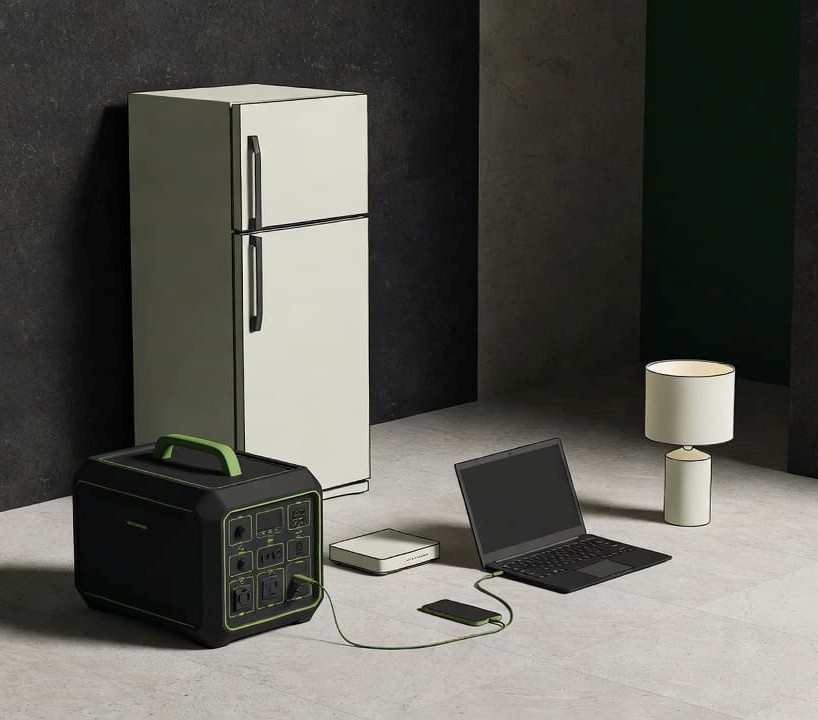
The price jump is larger, of course. For a rough sense of how bigger solar and battery setups can climb, Nedbank’s guide to solar power costs gives useful context.
Weigh up generators, inverters, and solar storage
Generators are strong on raw power, but they are noisy, need fuel, and are not safe indoors. While robust solar power systems using solar panels offer excellent off-grid capability, they come with a higher entry price. Alternatively, a hybrid inverter setup combined with an automatic transfer switch provides a seamless high-end route for home energy storage.
Ultimately, the right choice comes down to your required backup time during an outage, how much of the house you want to keep running, and how hands-on you want the installation to be.
Simple buying tips that help you get the most for your money
Start by identifying the appliances you use during every power failure. Consider how long you need them running and how quickly the unit can recharge before the next outage. If your area experiences back-to-back disruptions, charging speed is just as vital as capacity. To stay prepared, remember that solar charging via solar panels is a cost-effective and reliable way to keep your system ready for the next event.
Choose a system you can grow with
Starting small is a smart move. If your budget is limited, purchase a unit that covers your immediate requirements today and allows you to expand your battery bank later if your energy needs grow.
Avoid paying for features you will not use
Big numbers on a box can be tempting, but it is best to ignore the marketing hype. The best home power back-up is the one that fits your house, your budget, and your actual load shedding pattern. If you only need a simple portable solution, avoid paying for complex grid-tied features that you will never actually use.
Frequently Asked Questions
What is the difference between a portable power station and a generator?
Portable power stations use lithium batteries and are quiet, clean, and safe for indoor use, making them perfect for powering sensitive electronics. Generators typically run on fuel, produce carbon monoxide, and must be used outdoors, making them better suited for high-demand, long-term power needs.
How do I calculate what size system I need?
Start by listing the devices you absolutely need to keep running during an outage and checking their power consumption in watts. Choose a system that can handle the combined wattage of these devices and provides enough battery capacity to run them for your expected duration of power cuts.
Can I use my backup system while it is charging?
Yes, most modern portable power stations feature pass-through charging, allowing you to power devices while the unit itself is plugged into the wall. This makes them highly convenient as a seamless uninterruptible power supply for your home office or entertainment center.
Why should I choose lithium-based batteries over older options?
Lithium iron phosphate (LiFePO4) batteries are significantly more efficient, have a much longer lifespan, and require no maintenance compared to older lead-acid or gel battery technologies. They offer better performance and safety, providing a better long-term return on your investment.
Tips from an online teacher
Plug your backup into a multiplug and put your laptop and internet connections (fiber and LTE router) on it. This ensures that if the power cuts, you’re always connected. So basically, your essentials are going through the backup and the backup is plugged into the wall. If the power cuts, you’ll hear that beep and it will switch over.
Things you can do to extend power: turn the brightness of your laptop down and only use what you need. When your power backup is done, you still have your laptop battery and your phone to hotspot off. That will give you at least another half hour.
Conclusion
Home power backups come in many forms, and they do not have to be an all or nothing investment. Whether you need a simple uninterruptible power supply for your internet router or full solar power systems to keep your entire household running, the key is matching your battery bank to your specific energy load. The EcoFlow RIVER 2 Max is ideal for light essentials, the EcoFlow DELTA 3 Max fits everyday family comfort, and the EcoFlow DELTA Pro 3 is the best choice for longer outages and heavier power needs.
Choose the smallest setup that comfortably covers real life in your home. Upgrade only when your routine or the frequency of outages truly demands it. Ultimately, having reliable backup power provides peace of mind when the grid goes down. That way, you can really take your power back.
Disclaimer: This post contains affiliate links and AI as well as human content.




[…] 2024: he now has his own electricity to print!) At another party Nicky went to recently they had the generator going, which also works well. He’s been to other parties where they had this during the day […]