This guest post was written by Annelise van der Merwe.
Every mom knows that week. School shoes have been outgrown, the geyser has chosen now to break, and payday is nine days away. When money is tight, a short-term loan can look like the fastest way out. Sometimes it is a reasonable one. It is also one of the most expensive ways to borrow, so a few minutes of checking before you sign can protect the whole household budget.

Here are five questions worth asking before you borrow a cent.
1. Is the lender registered with the NCR?
Anyone who lends money in South Africa has to be registered with the National Credit Regulator (NCR), and a registered lender shows its registration number on its website. Take a minute to look that number up on the register at ncr.org.za. If a lender will not show a number, or asks you to pay a fee before you receive any money, walk away. Real lenders take their costs out of the loan agreement, not from your pocket up front.
2. What will it really cost?

The National Credit Act puts a ceiling on what lenders may charge for a short-term loan, which is R8 000 or less repaid within six months. At the legal maximum, a lender can charge interest of up to 5% a month, an initiation fee of R165 plus 10% of the amount above R1 000 (never more than R1 050), and a service fee of R60 a month. Fees exclude VAT.
Here is what that looks like in rand. Borrow R2 000 for one month and, at the legal maximum, you could pay around R425 before VAT, so you repay roughly R2 425 or a little more. That is more than 20% on top of what you borrowed, for a single month. Before you apply, put your own amount and term into a short-term loan cost calculator so the number on the screen is not a surprise on payday.
3. Can I repay it in full on payday without borrowing again?
This is the question that matters most. Take your next salary and subtract rent, groceries, transport, school costs and the loan repayment. If what is left will not carry you to the following payday, the loan has not solved the problem, it has moved it one month along and made it bigger. Lenders are required to check that you can afford a loan, but nobody knows your household budget better than you do. If the sums only work when you ignore something, they do not work.
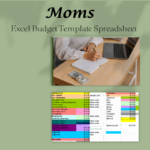
If you need a useful budget spreadsheet, check this one out here.
4. What does the lender need from me, and who sees my details?

Most lenders will ask for your South African ID, proof of income such as recent payslips or bank statements, and a bank account in your name. Knowing the list in advance saves you a rejected application and a few wasted days. A guide to loan requirements in South Africa covers what to have ready. Be careful where you send those documents. Only upload your ID and bank statements through the lender’s own website or app, never to a stranger on WhatsApp or social media who promises “guaranteed approval”.
5. Is there a cheaper option I should try first?
A short-term loan should be the last stop, not the first. Before you borrow, it is worth asking:
- Can your employer advance part of your salary, often at no cost?
- Can you agree a payment plan with the school, clinic, municipality or shop you owe, instead of paying a lender to settle them?
- Does your stokvel or savings group allow a short loan or early payout?
- Is there anything in the house you no longer use that someone would buy this week?
If you are juggling several debts and the shortfall comes back every month, that is a sign to speak to a registered debt counsellor, which you can find through the NCR, before taking on another loan.
If you decide to borrow
Do not accept the first offer you see. Lenders differ on how much they lend, how fast they pay out and what they charge, and the difference is real money. You can compare registered short-term lenders side by side, check each lender’s NCR number, and read the full agreement before you accept. Borrow only what you need, and set a reminder for the repayment date so it never catches you out.
The short version
- Check the lender’s NCR registration number at ncr.org.za.
- Work out the total cost in rand before you apply.
- Only borrow what you can repay in full on payday.
- Try your employer, creditors and stokvel first.
- Compare lenders instead of taking the first offer.
Disclosure: MoneyMatcher earns a commission when readers apply through its links or form. This article is general information, not financial advice, and MoneyMatcher is not a lender. This post is sponsored by MoneyMatcher.
AUTHOR BIO
Annelise van der Merwe writes about household money for MoneyMatcher, an independent South African loan comparison service. MoneyMatcher is not a lender and does not give financial advice. Compare lenders, check legal cost caps and use the free calculators at moneymatcher.co.za.




Leave a Reply