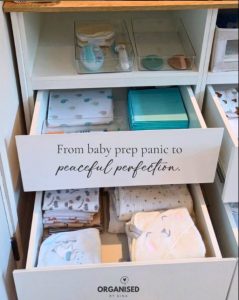
A well-organized nursery creates a calm, functional and welcoming space for baby and parents. Before organizing, the nursery may have cluttered shelves/cupboards, mixed toys, and supplies that are difficult to find. Especially after the baby shower…. you may feel very overwhelmed with so many gifts and accessories and think “ Where do I start?”
This can make daily routines stressful and time-consuming.
Thoughtful baby room or nursery organisation in Johannesburg helps create a calm, orderly space that supports early childhood development from day one, laying the right foundations long before your little one transitions to local preschools in Johannesburg.
Good nursery organisation doesn’t need a big room, expensive baskets, or a Pinterest-perfect finish. It needs a simple home for the things you use every day, plus enough clear floor space to breathe.
Start small, work in short bursts, and build a room that feels safe and calm when you are tired at 3 am.
Key Takeaways
- Start small and sort gradually: Avoid tackling the whole room at once; instead, sort one cupboard, drawer, or shelf at a time to prevent burnout.
- Maximise practical storage: Measure spaces before buying organisers and use clear labels on baskets so that everyday essentials can be grabbed one-handed.
- Establish functional zones: Create distinct, dedicated areas for sleeping, changing, feeding, and play to keep the room orderly and safe.
- Design for every carer: Ensure your system is simple enough for partners, grandparents, and nannies to navigate effortlessly during busy routines.
- Adapt as baby grows: Regularly review and update the room layout, storage sizes, and safety measures as your child transitions through developmental stages.
How to organise your baby’s room or nursery from the ground up
Don’t try to sort the whole room in one heroic Saturday session. Pregnancy is tiring enough, and nursery organising should not leave you flat on the sofa surrounded by unopened storage boxes.
Choose one cupboard, drawer or shelf at a time. Keep a rubbish bag, donation box and laundry basket nearby. It helps you make quick decisions instead of shuffling the same items around the room again and again.
Before buying organisers, measure your cupboards, drawers and open shelves. Many Johannesburg homes and flats have lovely rooms but limited built-in storage. A basket that looks perfect in a shop is no help if it won’t fit under the changing table.
Empty every shelf and cupboard before sorting
Take everything out. Yes, everything. It can look worse before it looks better, but this is where you see what you actually own.
Group items into clear categories: clothes, nappies, toiletries, toys, books, learning materials and keepsakes. Then make separate piles for items to keep, donate, wash, repair or discard.
Be practical here. A baby doesn’t need every outfit in the wardrobe at once. Keep what is useful, safe and right for their current stage. Anything stained beyond saving, broken or past its best can go.
A drawer packed with too much baby stuff is not organised. It is only hidden clutter with a handle.
Clean furniture, storage and nursery surfaces
Once the room is empty, clean the cot, changing surface, shelves, drawers, cupboard handles and storage bins. Dust has a funny way of settling in the places you meant to clean later.
Use a baby-safe cleaning product and follow the furniture manufacturer’s care instructions. Avoid harsh fumes and heavily scented sprays in the nursery. Let every surface dry fully before putting clothes, nappies or toys back.
Also check for loose screws, chipped paint, splinters and wobbly furniture. This small check now can save a stressful surprise later.
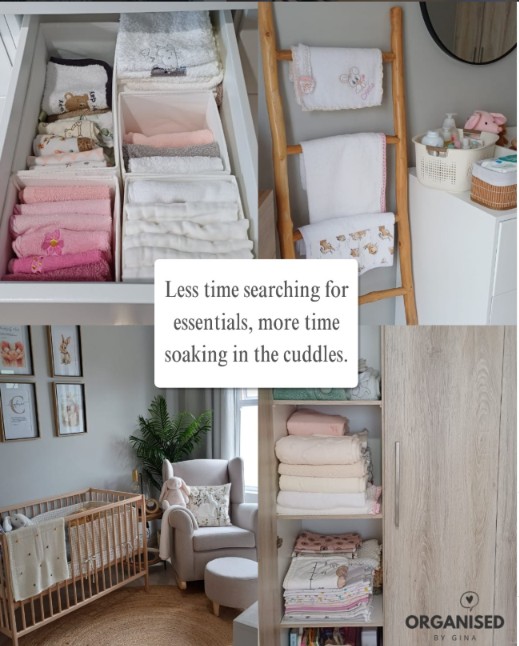
Wash new and second-hand clothing before your baby wears it, following the care label. Fold items by type and size, rather than trying to make every drawer look like a tiny boutique.
Keep sleepsuits, vests, babygrows, socks, blankets and going-out outfits in their own sections. Put the next size up in a labelled basket or drawer. Seasonal pieces, such as heavier blankets or special occasion clothes, can live elsewhere until needed.
This matters because babies grow at an almost rude speed. When the 0 to 3 month sleepsuits suddenly look snug, you won’t be digging through three drawers at midnight.
Create storage that makes your baby’s room easier
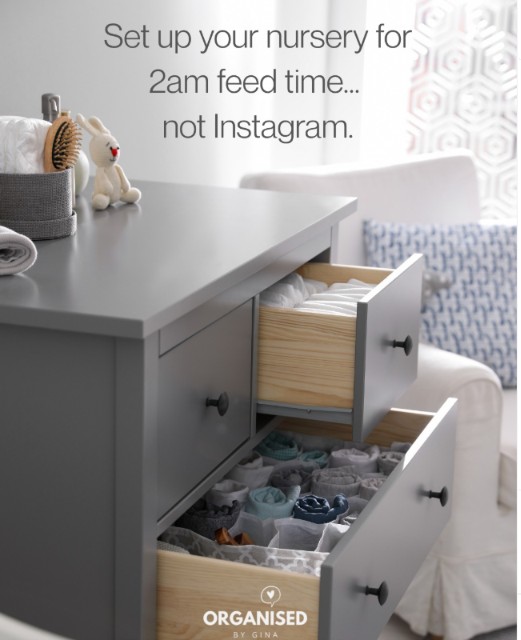
The best storage is not always the prettiest storage. It is the storage you can reach one-handed while holding a baby who has decided this is the exact moment they need you.
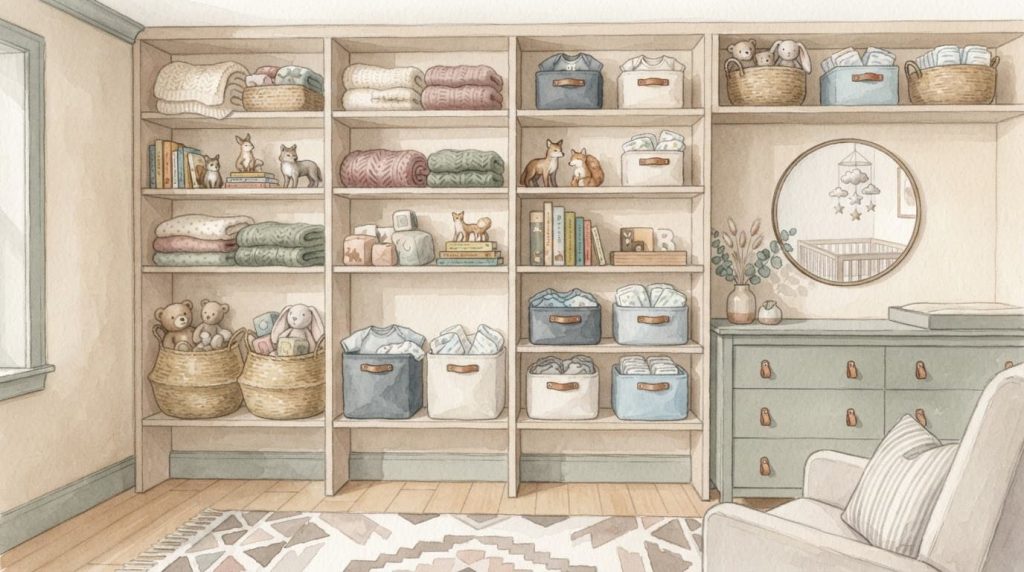
Open baskets, shallow drawers, dividers and labelled containers work well because you can see what belongs where. When sourcing durable wooden bins, eco-friendly baskets, or clever storage units, you might look to places like Mumbo’s or West Pack. Mr Price Home is also great. But even your closest Chinese store may have some interesting finds.
Choose a few sturdy, flexible pieces rather than filling the room with single-use furniture. These smart nursery investments can keep working as your baby’s needs change.
Label containers and shelves by category
Keep labels simple: nappies, wipes, bath items, medicines, spare clothes, books, toys and keepsakes. Put labels on the front of baskets or the top of boxes, where they are easy to spot.
Picture labels are handy once an older child starts helping to pack away. They are also useful for grandparents, a nanny or a helper. Nobody should have to open six identical fabric bins to find the burp cloths.
Use categories everybody understands. “Baby bits” might sound cute, but it tells nobody where anything belongs.
Keep everyday essentials within easy reach
Place nappies, wipes, muslin cloths, burp cloths and a clean change of clothes close to the changing area. A small basket beside the feeding chair can hold extra muslins and a water bottle for you.
Keep medicines, cleaning products, cords, scissors and small objects locked away or high up. Never leave anything unsafe on the changing surface, even for a second. Babies have a talent for choosing that second.
For more ideas beyond the nursery, read these practical tips on child-proofing your home.
Store seasonal and sentimental items separately
Keep outgrown clothes, special blankets, baby shower cards and rarely used equipment away from everyday storage. A high cupboard or clearly labelled lidded box is perfect.
Write the size and contents on each box, such as “6 to 9 months winter clothes” or “first-year keepsakes”. If you store boxes in a garage, spare room or loft, keep a short list on your phone. Future you will be grateful.
Set up nursery zones for sleep, changing, reading and play
Even a small nursery can have zones. You are not building a showroom. You are giving each daily task a sensible little home.
Keep only what each area needs. This stops the cot becoming a toy basket, the changing table becoming a laundry mountain and the feeding chair becoming a dumping ground for everyone else’s things.
Make the sleep area calm and safe
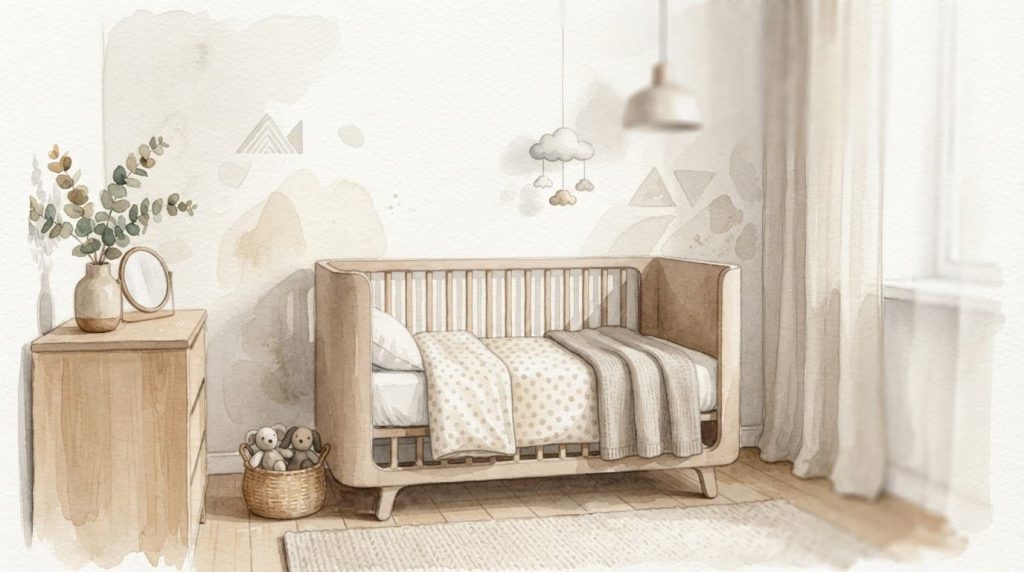
Place the cot or sleep space away from windows, heaters, dangling cords and unstable furniture. Keep spare sheets nearby, but outside the cot, so night-time changes are quick and fuss-free.
At the changing station, keep nappies, wipes, barrier cream, clean clothes and a laundry basket close by. Refill the basket before it is completely empty, not when you are holding a wriggly baby with one last nappy left. That is a particular kind of panic.
A feeding chair or quiet corner needs little more than muslin cloths, a parent water bottle and perhaps a small book for those long feeds. All supplies should be within adult reach, while unsafe items stay inaccessible to baby.
Create quiet-time, reading and play spaces
A small basket of board books makes reading time easy. Add a soft mat for supervised tummy time and, later, a low shelf with a few safe toys. You can draw inspiration from the structured activity areas found in a quality nursery school or private preschool.
Keep noisy toys away from the sleep area where possible. Rotate toys rather than putting every rattle, soft toy and block out at once. A smaller selection is easier to tidy, and babies often notice familiar toys again when they return.
Make the baby’s room easy for every carer to use and maintain
A nursery stays neat when the system is simple enough for everyone to follow. That includes you, your partner, grandparents, a nanny, a helper and any babysitter who steps in.
Agree on where things belong. Use the same labels. Keep everyday supplies in the same places. The goal is not perfection. It is avoiding the daily hunt for clean vests while someone is crying.
Show a nanny or helper where everything belongs
Give your carer a quick walk-through before baby arrives. Show them the clothing sizes, nappies, toiletries, laundry basket, spare bedding and rubbish bin.
Explain safety rules too. Medicines, cleaning products and small objects need secure storage. A photographed storage guide on your phone can help a new carer settle in without guessing.
Use a five-minute reset after each busy day
At the end of the day, return loose clothes, books and toys to their places. Restock nappies, clear the changing surface and put laundry where it belongs.
Five minutes is enough on most days. If it isn’t, leave it. The early weeks are not the time to wage war on a basket of muslins. Share the reset when you can.
Review the nursery as your baby grows
Every few months, check what no longer fits or works. Move outgrown clothes into storage, remove unused supplies and place unsafe items higher as your baby starts rolling, crawling and standing. If you are later planning for early childhood education or looking at a local nursery school, you will find that good organisational habits make every transition smoother.
Your nursery will change because your baby will change. That is not a sign the system failed. It means the room is growing with your family.
Frequently Asked Questions
When is the best time to start organising the nursery?
It is best to start during your second trimester when you still have plenty of energy. Working in short, manageable bursts prevents pregnancy fatigue and ensures the room is ready well before your due date.
Do I need expensive storage containers?
Not at all. Practicality matters far more than aesthetics, and simple open baskets, shallow drawers, and labelled cardboard or plastic containers work brilliantly without breaking the bank.
How can I keep the nursery organised with multiple carers?
Use clear labels on all shelves and storage bins so that everyone—from your partner to a nanny or grandparent—knows exactly where items belong and where to return them.
A nursery that works on real-life days
After organizing, the nursery is neat, functional, and inviting. Once grown, child can easily access toys and learning materials, while caregivers save time finding supplies. The improved layout encourages independence, supports learning, and creates a more enjoyable environment for everyone.
Much like tender seedlings taking root, your routine will grow and flourish over time. A thoughtful space simply gives you the solid foundation to enjoy every moment.
Looking for a nursery organiser in Johannesburg? Gina will help you.
This post is based on information given to me by Gina. Gina is amazing. You can read about how she organised my study here.
Now she’s taking on nurseries to give baby and moms the best start possible.
I highly recommend her.
Gina Pires: 083 339 6119 Instagram Facebook
Check out her Instagram reel below of a before and after she’s done her magic:




[…] a more minimalist approach can also maximize value. A cluttered room filled with too many single-purpose items can feel overwhelming and is harder to adapt to. Focusing […]